
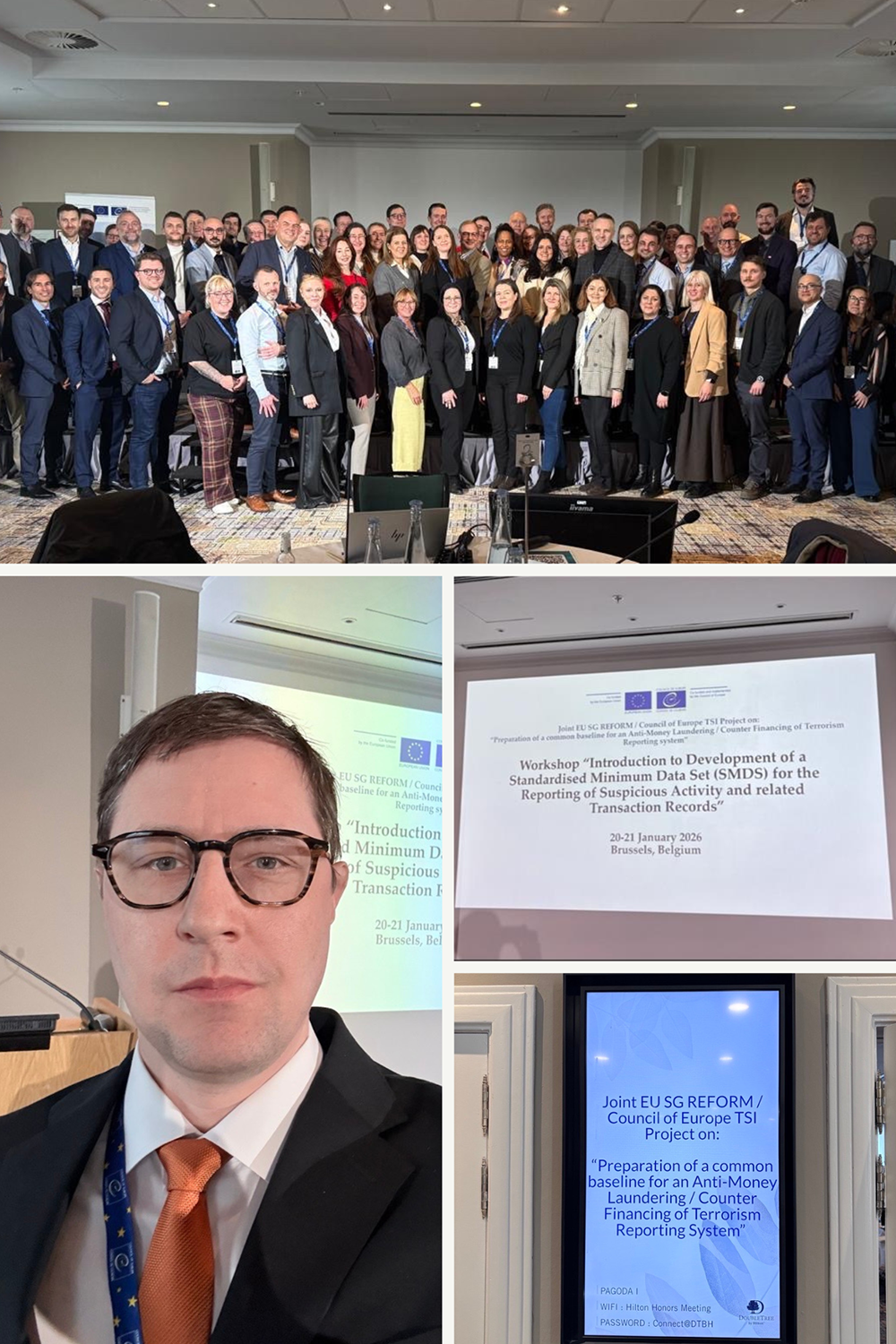
On 20-21 January 2026, selected stakeholders from across Europe gathered in Brussels for a workshop titled “Introduction to Development of a Standardized Minimum Data Set (SMDS) for the Reporting of Suspicious Activity and related Transaction Records”, hosted by the Council of Europe.
The session brought together Financial Intelligence Units (FIUs), subject matter experts, and private sector representatives to review the progress on the SMDS initiative and to gather early input ahead of the handover to ALMA for technical standardisation.
Trapets participated in the workshop as one of the few stakeholders representing technology providers for the reporting of suspicious activity and related transaction records.
We spoke with Jesper Thor, Software Architect, who attended the session, to understand why this Initiative matters and what it could mean for future reporting practices.
What were the organisers hoping to achieve through these conversations?
The purpose of the session was to share the work carried out by FIUs, as well as surface potential barriers that organisations might face when adopting a standardised data set.
By bringing these perspectives together early in the process, the organisers could gather insights that help refine the SMDS and make it more practical for real-world use, while still meeting the needs of FIUs and investigators.
What stood out most to you during the workshop?
The strongest highlight was having so many stakeholders from across the reporting chain in one place to create a full-picture perspective.
There was a clear sense of shared responsibility. Everyone had the opportunity to contribute, share insights, and understand how their role connects to the broader objective of fighting financial crime.
What were your 3 key takeaways from the workshop?
- From a technology provider’s point of view, harmonised reporting is welcome, but being included in the discussions at this stage is extremely valuable. It’s not something we take for granted.
- The workshop was well facilitated, with clear objectives. This helped us keep discussions focused and productive, while still allowing room to move between high-level questions and detailed data considerations.
- The direct dialogue with FIUs was extremely valuable. Discussing the minimum data needed for rapid reporting and investigations gave both sides genuine insight into each other’s potential challenges and solutions.
Read more about the workshop on the Council of Europe's website.