

Introduction
The upcoming Anti-Money Laundering Regulation (AMLR) is probably one of the most highlighted topics in 2026. With a deadline for July 2027, this year is focused on preparations and understanding what’s needed to comply with the rules.
At Penningtvättsdagarna, AMLR was a consistent topic across both formal sessions and informal discussions. To understand how prepared the market really is, we asked participants to complete an anonymous survey.
Here’s what the responses show.
A market in motion, but not aligned yet
What emerges from this survey is a picture of an industry mid-transition: aware of what AMLR requires yet still working through what it means in practice.
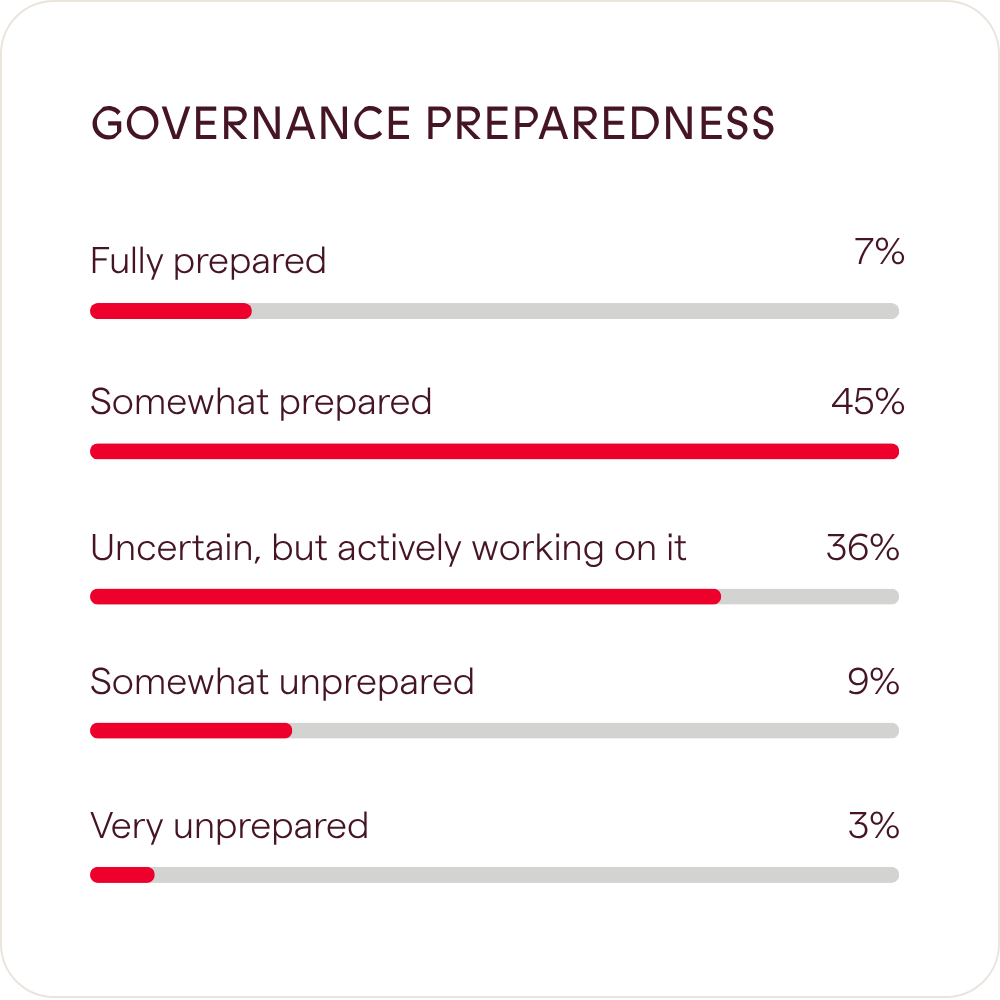
Most respondents position themselves in the “somewhat prepared” or “actively working on it” categories, both from a governance and operational perspective.
- 45% of respondents feel somewhat prepared from a governance perspective, compared to 43% from an operational perspective.
- 36% remain uncertain but are actively working on governance preparations, while 32% report the same on the operational side.
This is a familiar phase from an AML professional’s standpoint.
Organisations understand the direction of travel, but are still interpreting the details, waiting for regulatory technical standards, and watching how peers respond.
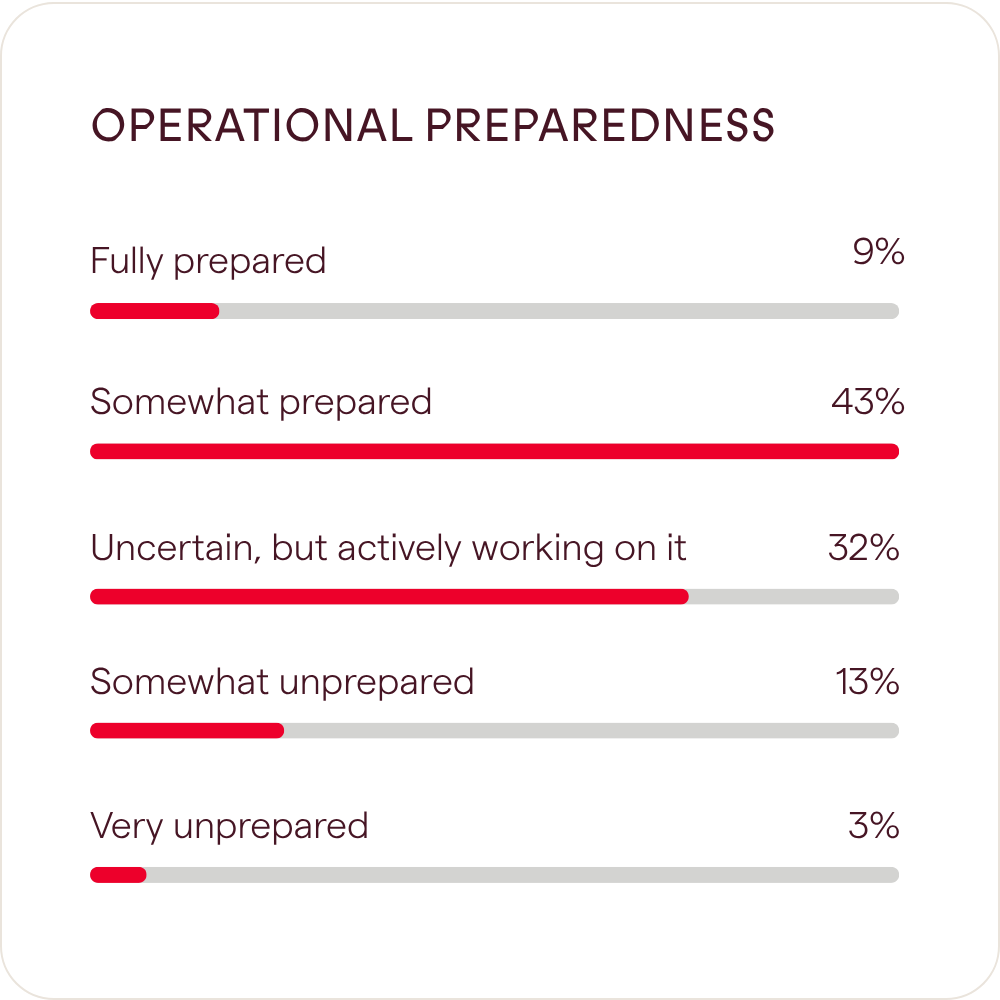
From a governance perspective, the relatively low number of organisations that feel “fully prepared” stands out at 7%. While many teams have started implementation work, fewer feel confident at the board and strategic level.
Without clear governance, including defined risk appetite and oversight structures aligned with AMLR, there’s a risk that initiatives become tactical rather than strategic. For AML professionals, this is where alignment needs to happen early.
AMLR is fundamentally a data problem
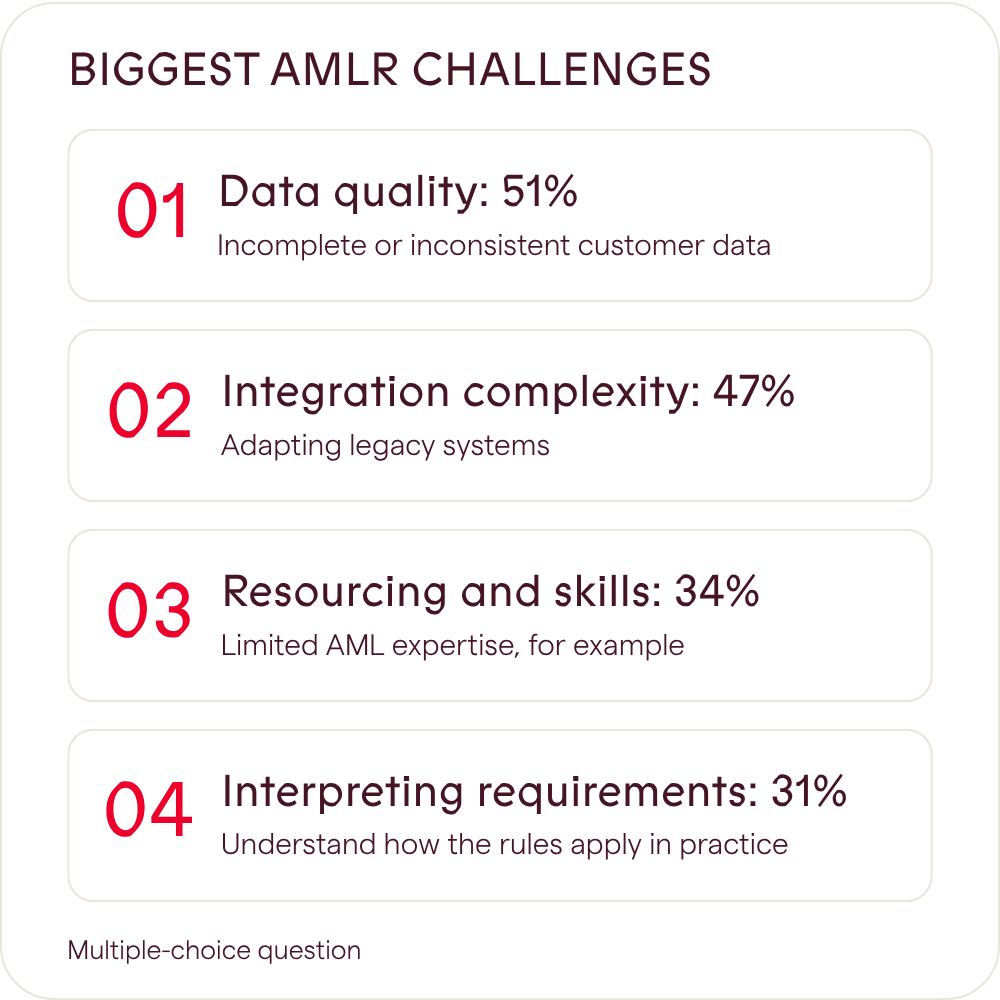
One of the strongest signals from the survey is that AMLR is being experienced mainly as a data challenge. Data quality, integration complexity, and fragmented systems dominate the list of obstacles, while “better data integration” stands out as the most critical capability going forward.
51% of the respondents cite data quality as one of the biggest challenges in preparing for AMLR, followed by:
- Integration complexity (e.g. adapting legacy systems): 47%
- Resourcing and skills (e.g. limited AML expertise): 34%
- Interpreting requirements (e.g. understanding how the rules apply in practice): 31%
- Operational capacity (e.g. alert volumes): 23%
Companies recognise that compliance with AMLR is less about adding new controls and more about connecting what already exists (customer data, transaction data, risk assessments) into a coherent, auditable whole.
Many current AML frameworks were built in silos, often driven by local regulatory requirements. AMLR, by contrast, pushes toward a more unified, cross-border, and entity-centric view of risk.
KYC/CDD are at the centre of change
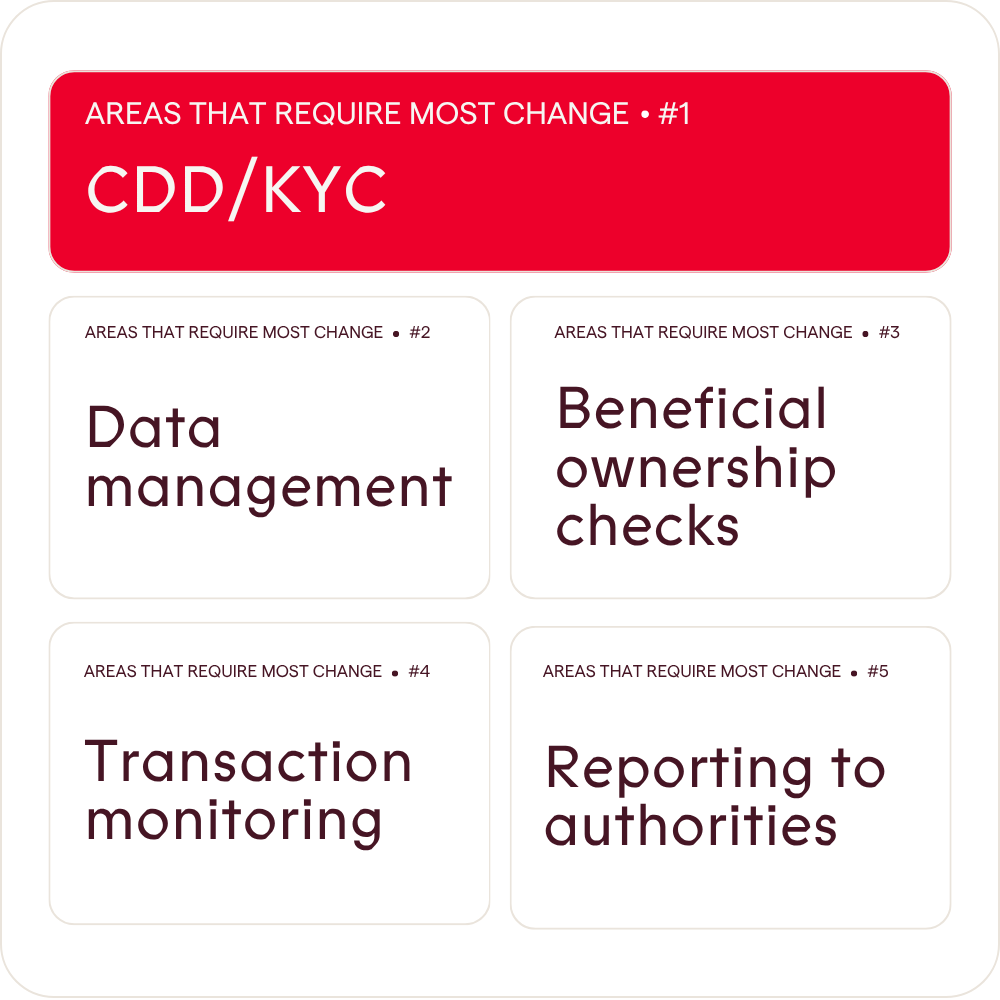
Customer due diligence (CDD/KYC) stands out as the area where the most change is expected, with 54% of respondents identifying it as a key focus. AMLR is reshaping the foundation of how institutions understand their customers.
47% of respondents identify data management as the area that will require the most change to comply with AMLR, followed by:
- Beneficial ownership checks: 32%
- Transaction monitoring: 27%
- Reporting to authorities: 18%
- Risk assessment methodology: 14%
Beneficial ownership, risk assessment methodology, and ongoing due diligence are all becoming more central and more dynamic.
For many AML professionals, this will require a shift from periodic, event-driven reviews to continuous customer risk assessment, supported by better data flows and trigger-based processes.
In practical terms, this means rethinking not just systems, but workflows and ownership across the first and second lines of defence.
Effectiveness is still poorly defined
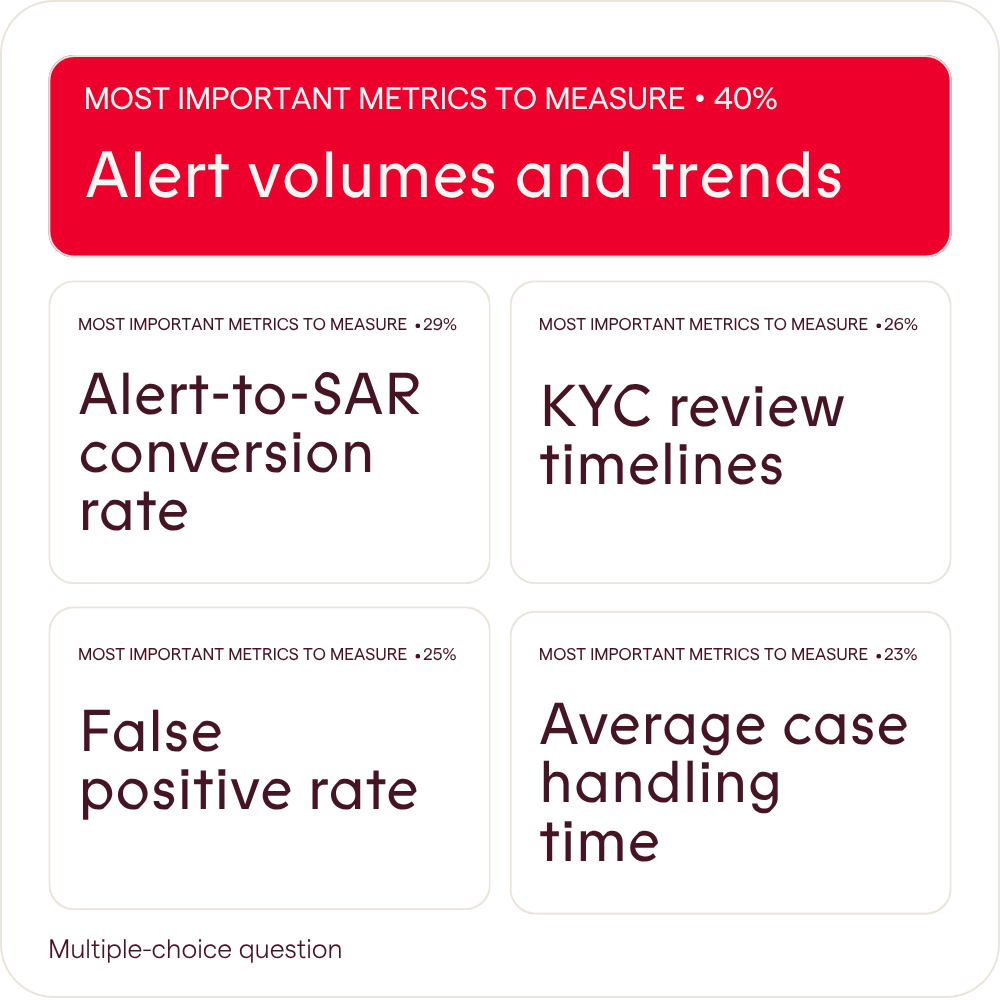
An interesting (and slightly concerning) finding is how many organisations have not yet defined how they will measure AML effectiveness. Those who have tend to focus on traditional operational metrics such as alert volumes or case handling times.
While these are important, they don’t fully address what AMLR is ultimately pushing toward: demonstrable effectiveness.
Regulators are interested not just in how many alerts are processed, but whether institutions can show that their frameworks are actually identifying and mitigating risk.
Many firms still have work to do in developing more outcome-oriented metrics, such as detection quality, risk coverage, and typology effectiveness, which will be critical in future supervisory dialogues.
Positive sentiment, but potential underestimation
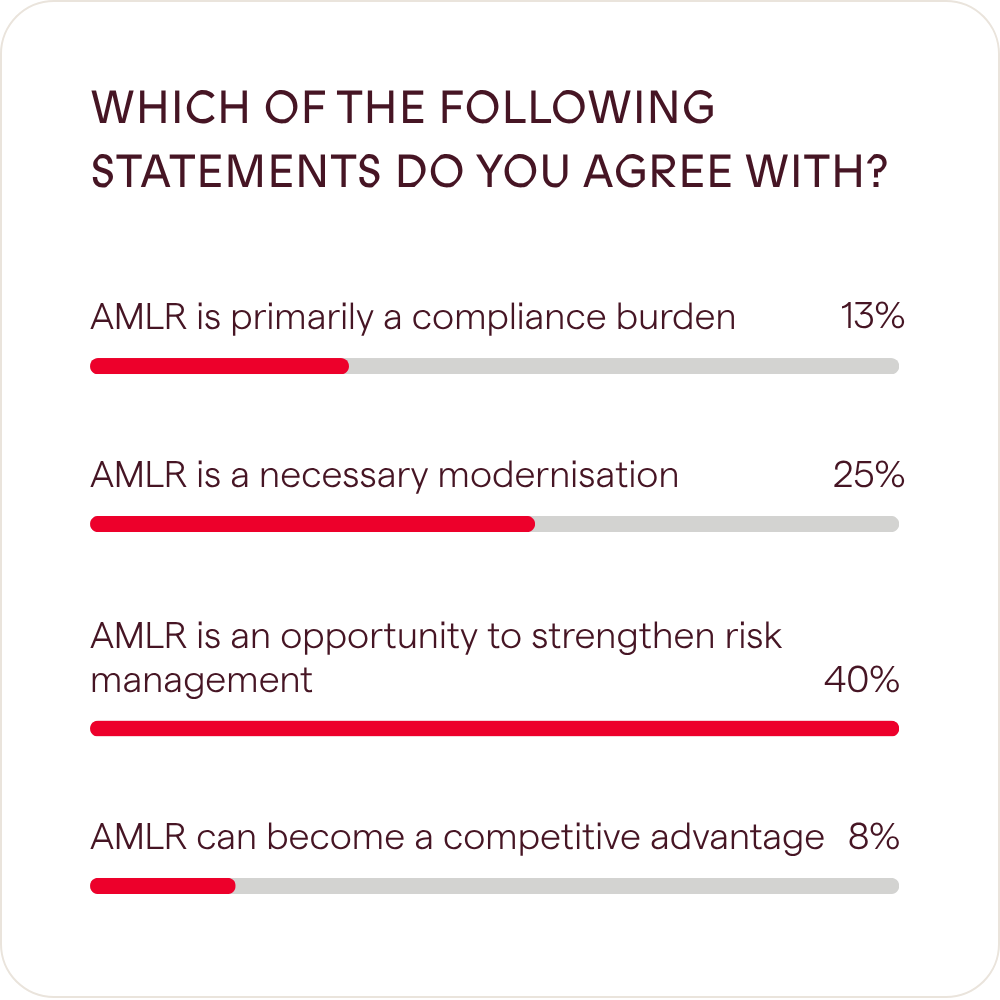
Encouragingly, most respondents see AMLR as an opportunity rather than just a compliance burden.
This signals a change in mindset, where institutions begin to see AMLR not just as a regulatory obligation, but as a way to get better insight into customer behaviour and risk exposure.
If this perspective is carried through into implementation, AMLR could act as a catalyst for broader transformation, improving not only compliance outcomes but also operational efficiency and decision-making.
At the same time, there is a gap between this optimism and the current level of preparedness. Data challenges, unclear metrics, and governance gaps suggest that the scale of change may still be underestimated.
Besides policies, AMLR touches data architecture, operating models, governance structures, and even organisational culture. Treating this regulation as a compliance update only is unlikely to be sufficient in the long run against financial crime.
Final thoughts
As the industry is moving towards execution, alignment will take some time. The good news is that companies don’t have to start from zero. AMLR preparedness refers mostly to harmonising the existing processes rather than creating new ones.
For AML professionals, the focus is on three main areas:
- Establish clear governance and strategic direction
- Build a consistent and connected data foundation
- Define how effectiveness will be measured and demonstrated
Interested in learning how Trapets can help you prepare for AMLR? Our experts are here to help you.