What real-time transaction screening means for financial institutions
Learn about real-time transaction screening, what it means for financial institutions, and how you can adapt real-time transaction screening in your AML processes.
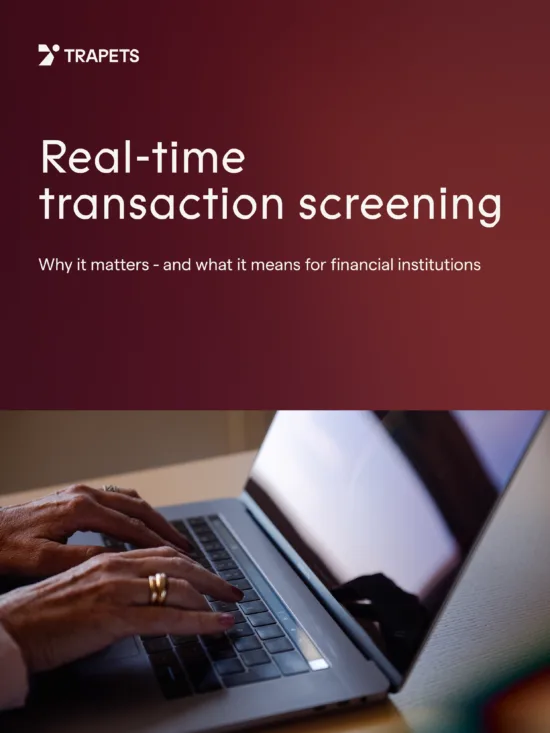
Financial institutions now operate in an environment defined by instant payments, heightened regulatory expectations, and a decreasing tolerance for gaps and delays in detecting financial crime.
Therefore, real-time transaction screening plays a central role for regulated entities working with payments, such as banks, payment service providers (PSPs), e-money issuers, and crypto-asset service providers (CASPs).
Traditional batch-based controls often introduce delays between payment initiation and detection, leaving institutions exposed to unnecessary risk and to payment execution delay.
Real-time screening addresses this issue by allowing institutions to identify and respond to potential problems immediately.
Download the guide and learn more about:
- What real-time transaction screening is
- Why it's essential for financial institutions
- How real-time transaction screening helps your company beyond compliance
- And how to effectively adopt real-time transaction screening in your AML processes
Get access to the guide by filling out the form below.
---
Obs: This material is provided for general information only and does not constitute legal advice.
Get your copy today
Download the guide and learn more about:
- What real-time transaction screening is
- Why it's essential for financial institutions
- How real-time transaction screening helps your company beyond compliance
- And how to effectively adopt real-time transaction screening in your AML processes
Don't miss out on industry news
Sign up to our newsletter to receive the latest news within the financial crime industry and to receive invitations to our webinars.